|
|
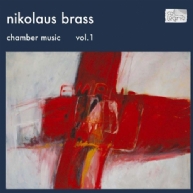
| It is the eternal questions that Nikolaus Brass mainly concerns himself with in his compositional work: the question of existence, of being, and first and foremost of all possible intermediate stages at the edge of what is conceivable, of what can just be grasped. In VOID (1999) he investigates the feeling left by loss, "structural empty spaces that bear the construction of sound while challenging it at the same time." For a due (2003), Brass has borrowed short captions from Yashushi Inoue's novel My mother; the last part is entitled memoria – "in 'commemoration' and 'consideration' of the speaking speechlessness of music." In TRIO (1987-1991) he works with fragmented shapes that spread through space, splitting the "progression of time" into "states of 'still now – then not anymore'." |
1CD | Contemporary | Special Offers |
|
|
|
| Recommendation |
|
|
|
|
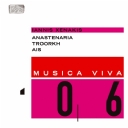
The universe of Mr. Xenakis: Early Christian cults in Anastenaria, Greek mythology in Aïs, and clusters and glissandi in the trombone concerto Troorkh.  |
|
|
|
|
|
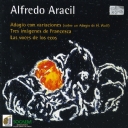
| Music on music on music: in his play with reminiscences superimposed many times over, the Spanish composer Alfredo Aracil surpasses himself. |
|
|
|
|
|
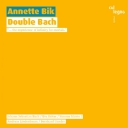
| “Bach is a complete cosmos for sceptics, Bach is the experience of in nity for mortals.” (Armin Thurnher) |
|
|